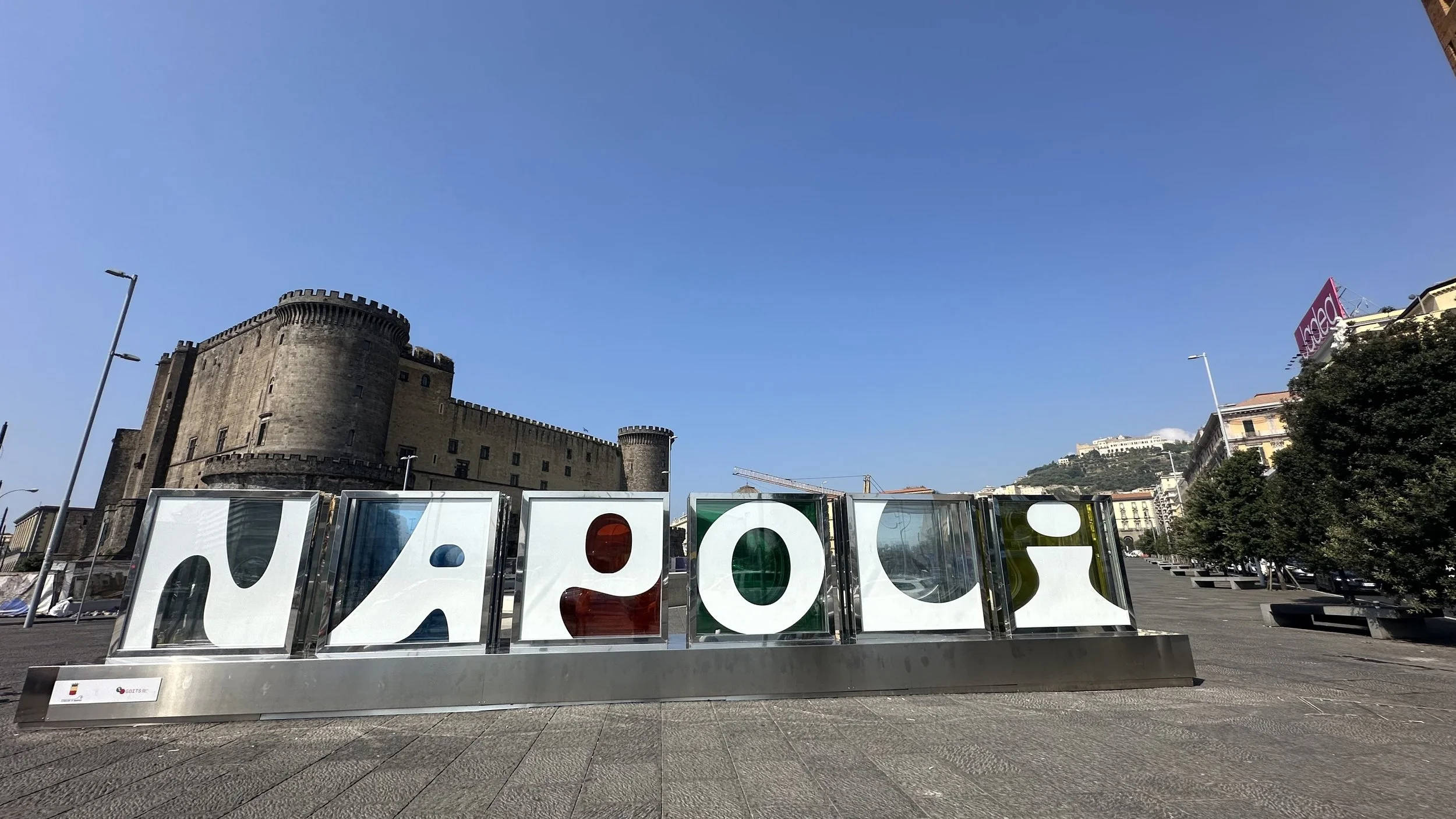
On December 21st 2025, Napoli celebrated its 2500 year old birthday. I shall say thats not too bad for this old city, which has seen volcanic eruptions, earthquakes, plagues, and wars. It’s been destroyed several times over and yet still survives, and furthermore, is keeping one eye open in modernising the for future. In 2027 Naples hosts the Americas Cup and Line 1 of the Metro finally links up to the Airport.
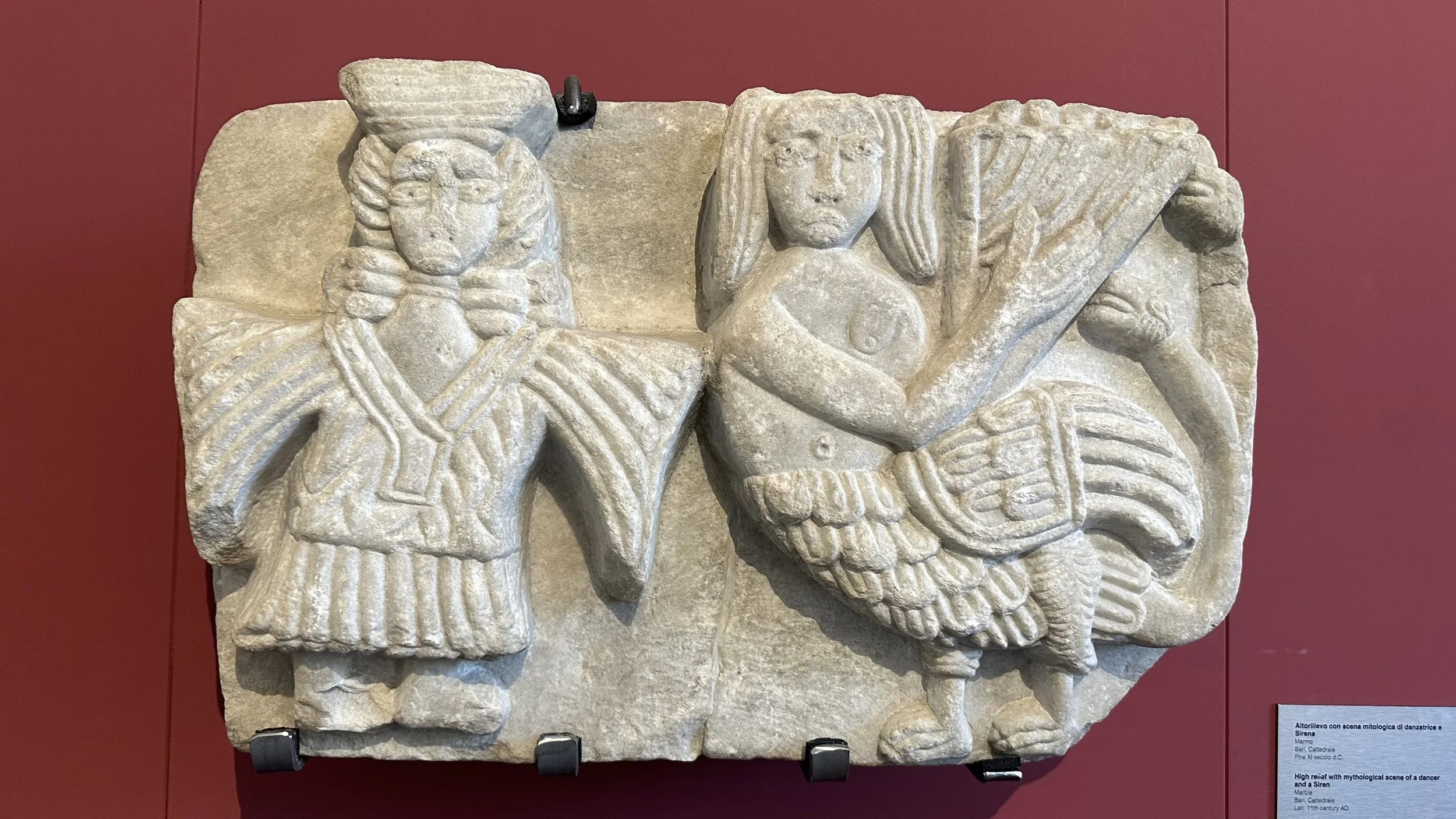
High relief with a mythological scene of a dancer and a siren, 11th century AD.
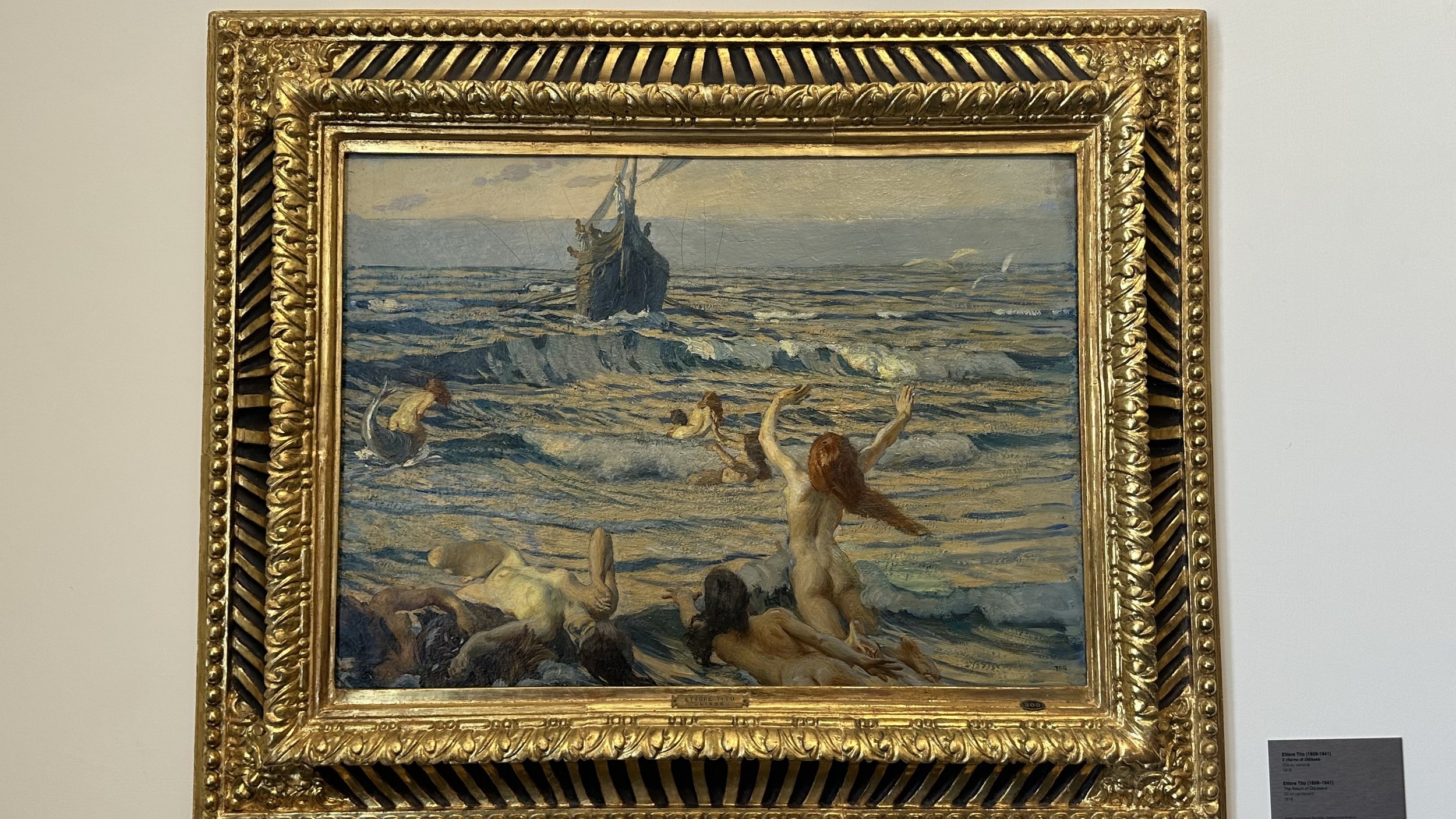
The Return of Odysseus, 1919 - Ettore Tito (1859-1941)
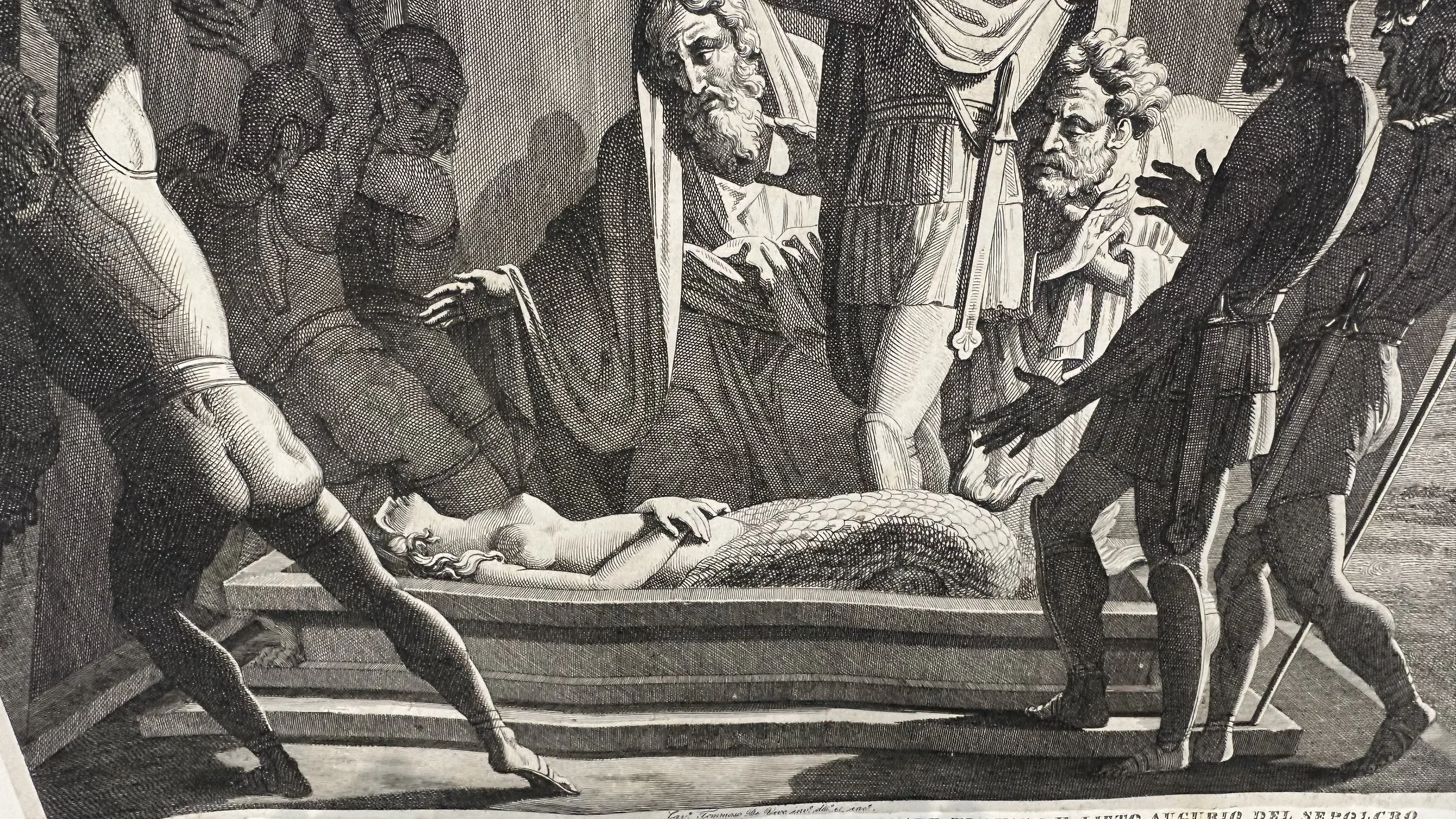
Engraving of the Greeks finding the body of the mermaid Parthenope.
The legend tells us that Napoli was founded by the most beautiful of all the mermaids, Parthenope. In the Odyssey, Ulysses passes near the island of the mermaids (possibly the island of Li Galli in front of Positano) forcing himself and his crew not to listen to the charming and hypnotic voices and songs of the mermaids. Parthenope, whom failed in the intent to seduce Ulysses, killed herself. The waves took her body to the islet of Megaride (where the Castel dell'Ovo is now situated) where she was buried.
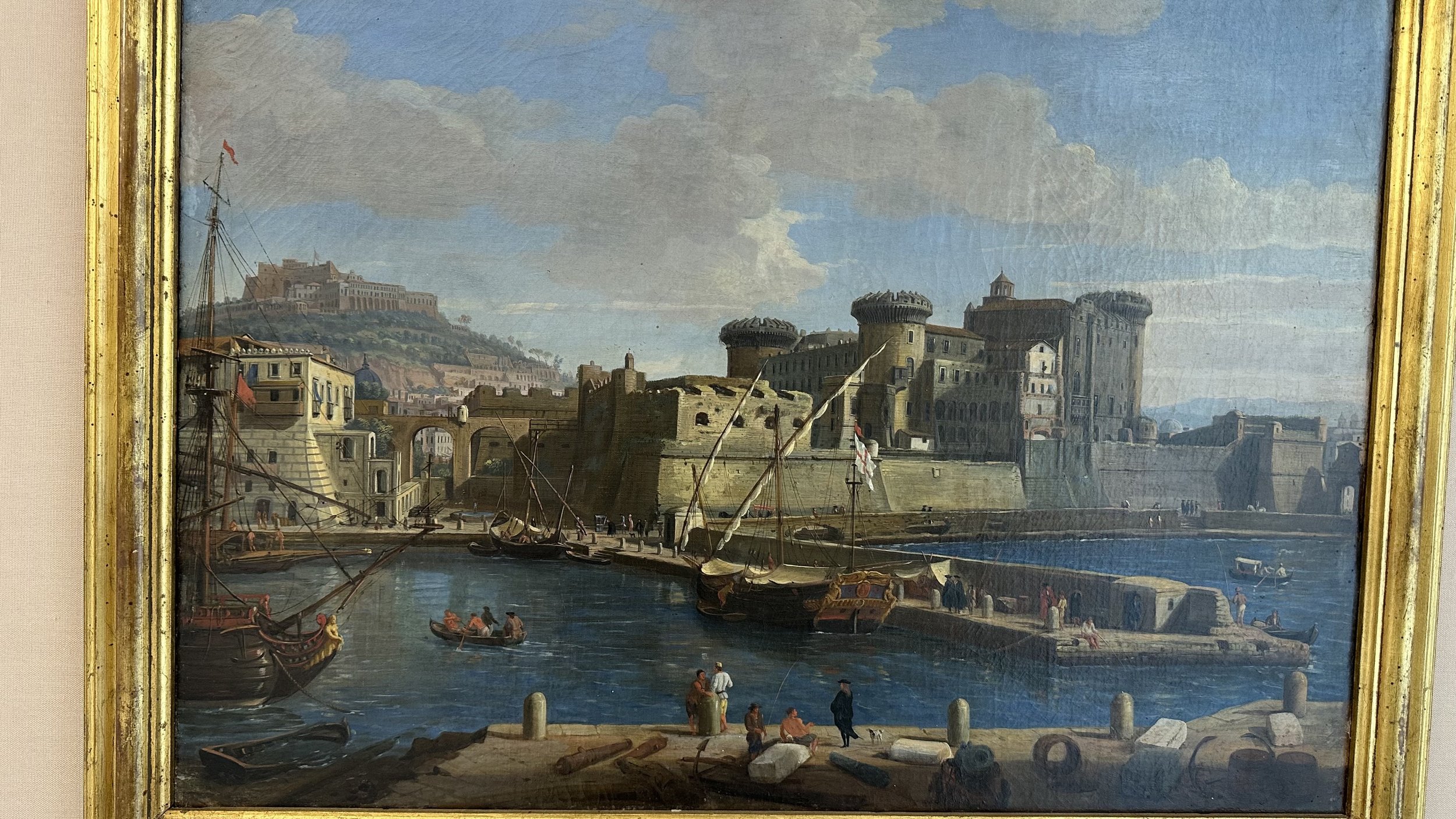
Stylised view of the seafront Castel dell’Ovo by Gaspar van Wittel (Amersfoort 1653 - Roma 1736).
It is a fact that during the centuries Napoli has charmed many kings, emperors, princesses, knights, scientists, philosophers, artists, architects, filmmakers, songwriters and tourists. It might be for its strategic position in the Mediterranean, the lovely climate or the beauty of its nature.
The first inhabitants were a small tribe of fishermen living in the area called Parthenope, by the sea front in the little island of Megaride around the VII century B.C. Then the ancient Greeks saw the potential of this area as an important port in the Mediterranean sea and established their own settlement in the second millennium B.C. and then expanded the city to what we now call the historic center ‘centro storico’.
Very soon this city which the Greeks called Neapolis (new city) became the new centre of commercial life, vibrant and the most important city of the Magna Graecia. The layout of the city we still see today was created by the Greeks: three long parallel streets, ‘decumani’, that today are Spaccanapoli, via Tribunali and via Benedetto Croce. You can still remnants of the old Greek walls in Piazza Bellini.
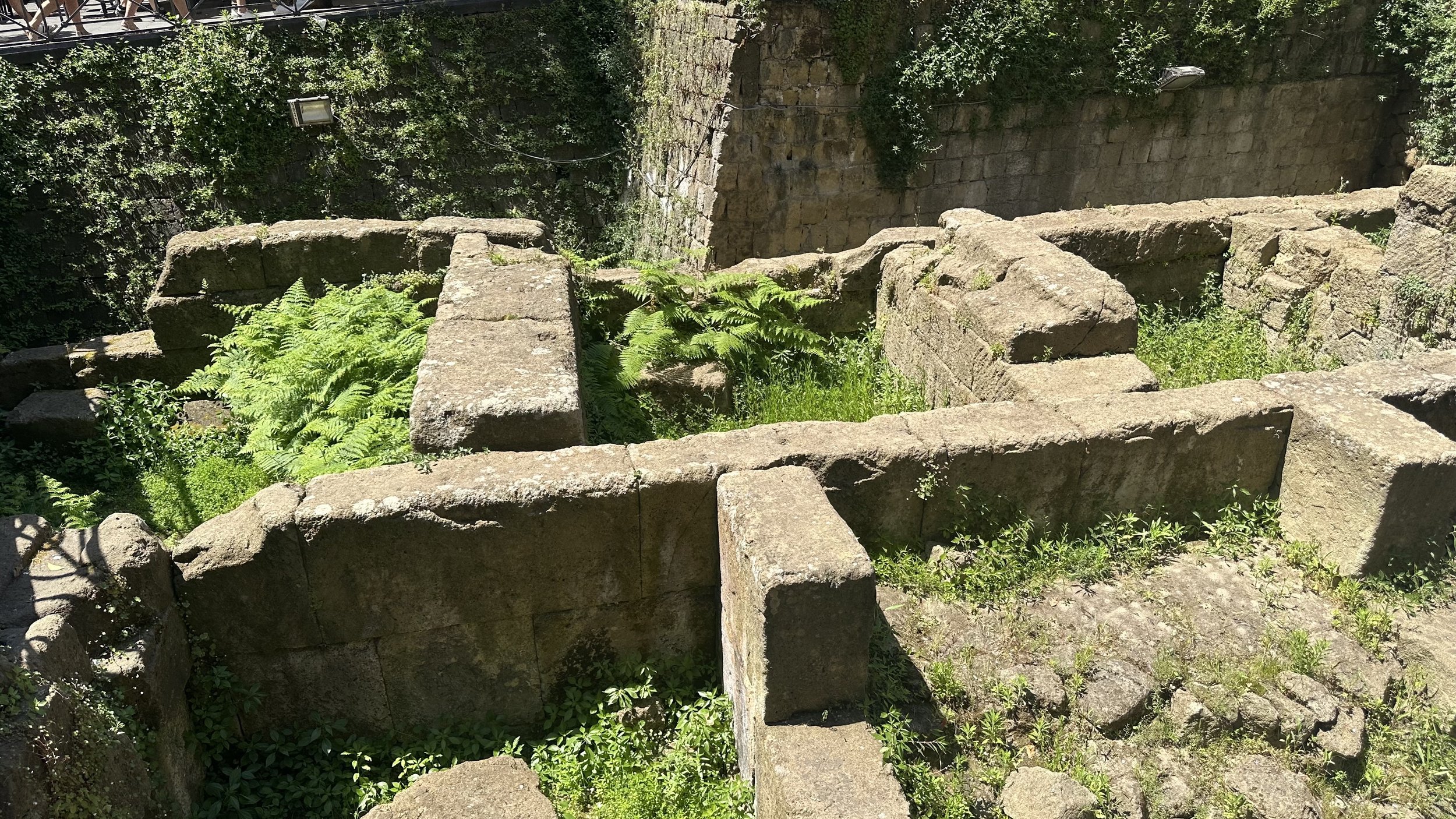
Rests of the ancient Greek walls still visible in Piazza Bellini.
During the Roman era, Napoli was called the city of ‘otia’ (literaly, the idle city) becoming a destination for holidays and an escape from the chaos of life in Rome. Here the Romans started to be build aqueducts, public baths, theatres and villas. Many important historical persons decided to have houses in the city like the emperors Claudius and Tiberus and the poet Virgil, who is buried here.
With the decline of the Roman Empire, Napoli was invaded firstly by the Goths, then the Byzantine Empire and then by the Normans.
As I already mentioned, Napoli was very desirable to many of the European empires and soon became an important strategic post in the Mediterranean, linking the western world to the east. It is with the German royal family of the Hohenstaufens that Napoli became a part of the Kingdom of Sicily under king Frederik II. This was a very prolific period for the city, intellectually and artistically, it was the new centre of the Kingdom (even though Palermo was the actual capital). In Napoli, was founded one of the first Universitys in Europe, Federico II University, which still today ranks in the top ten of the most important universities in Italy.
Meanwhile, the Angevin family started to conquer southern Italy, the Angevin duke Charles occupied Napoli, becoming the King of Sicily and moving the capital from Palermo to Napoli, residing in the Castel Nuovo (New Castel but also known as Maschio Angioino). The new king promoted many architectural and artistic works in the city, building many churches, including the construction of the Cathedral. More info in the section CHURCHES.
In 1282, after many wars, the Kingdom was divided in two. The Kingdom of Napoli was given to the Angevins and the Kingdom of Sicily to the Aragonese. In 1302, Frederik III was king of Sicily and Charles II of Napoli, who called to his court many artists and intellectuals from all over Italy, like Giotto and Boccaccio. However, the two separate Kingdoms didn't last very long as the rival Aragon king Alphonse I invaded Napoli in 1442. The Pala Strozzi pictured the battle between the Aragons and Angevins.
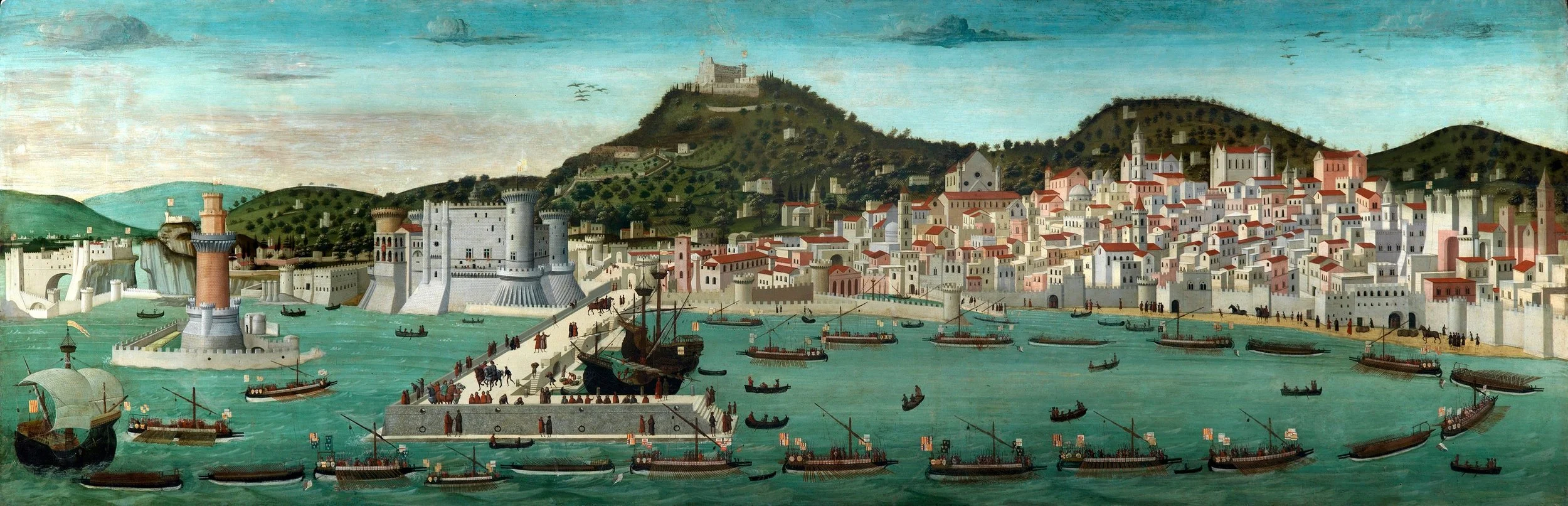
Tavola Strozzi, egg tempera on canvas, by Francesco Rosselli (attr.) 1472 - 73. (San Martino Museum).
In 1458, after the victory of the Aragon family, Ferdinand I was crowned King of Napoli. From that moment on, the city became the centre of the Renaissance in southern Italy. In 1503, king Ferdinand II the Catholic, included Napoli as part of the Spanish Kingdom, that lasted for another two centuries. During the Spanish reign, Napoli came into the peak of its splendour, it was a powerful economical centre, an important port and an exciting artistic and intellectual place to be. The Spanish viceroy Don Pedro de Toledo made important social, economic, architectural and political reforms. He also made significant changes to the planning of the city, dividing it into quarters, building new forts and creating new streets, like via Toledo.
By the 17th century, Napoli was the third largest city in Europe, after Paris and London. Even though, it was slowly declining because of the plague and the increase of poverty, it still was very important during the Baroque era, with the presence of Caravaggio, Bernini and the philosopher Giordano Bruno.
The XVIII century was dominated by the presence of the Austrian king Charles VI, which lasted until 1738 thanks to the victory of the Spanish branch of the Bourbons with Ferdinand IV and then with Charles VII who gave some of the splendour back to the city with many new constructions. In Napoli was established the first railway in Italy. In 1779, king Ferdinand IV divided the city into 12 quarters.
Today there are 30 quarters of the Comune di Napoli.
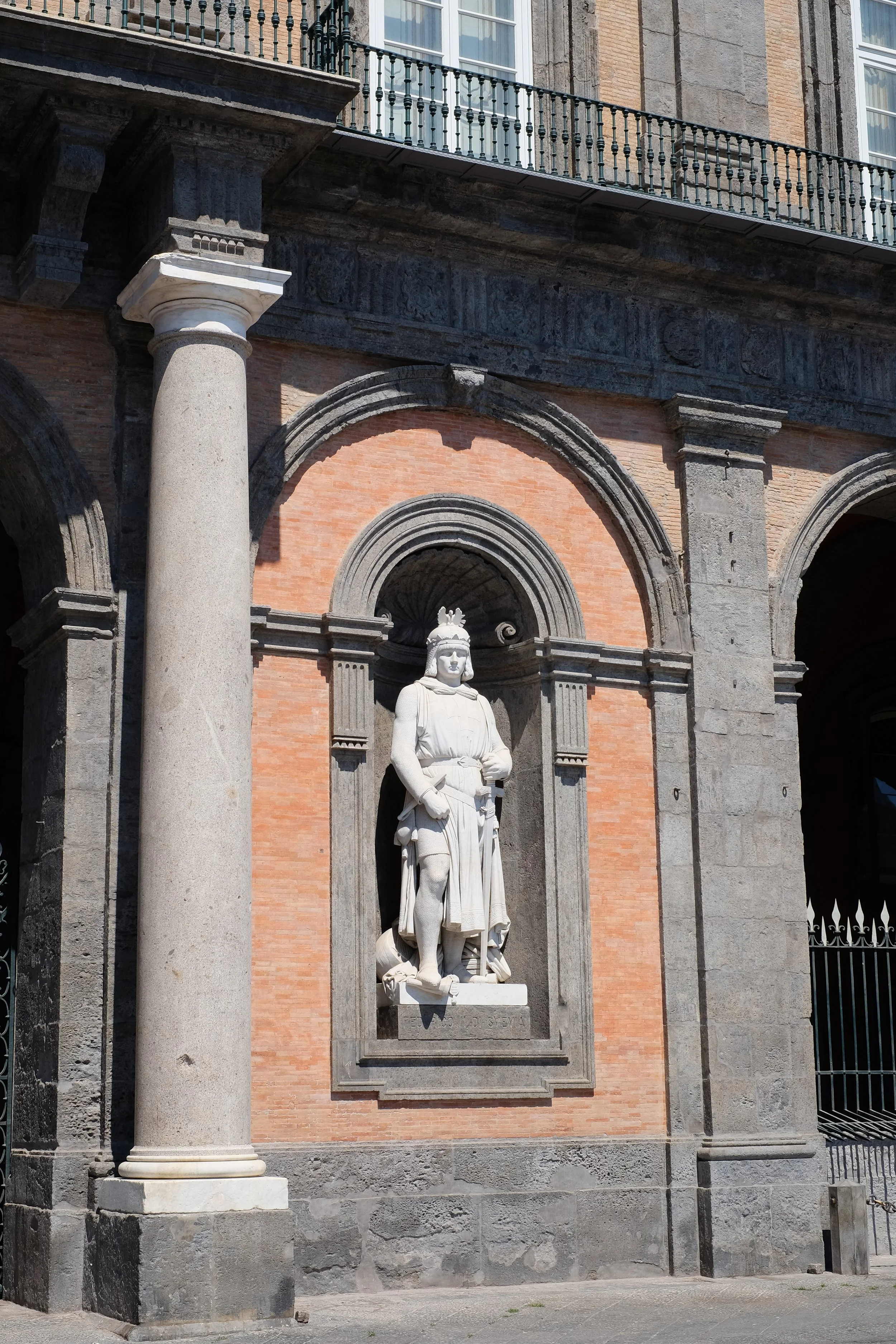
King Frederik II.
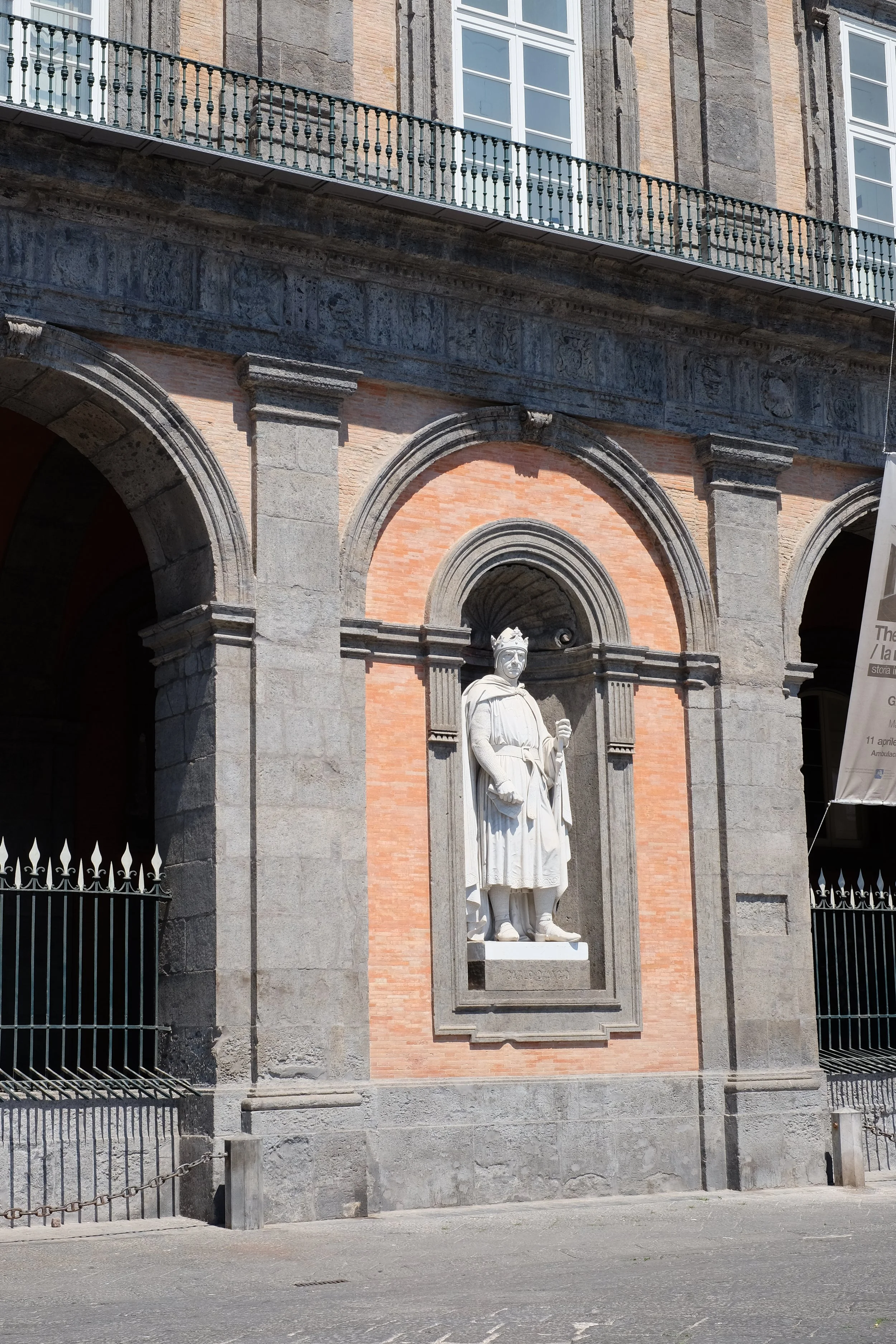
King Charles I.
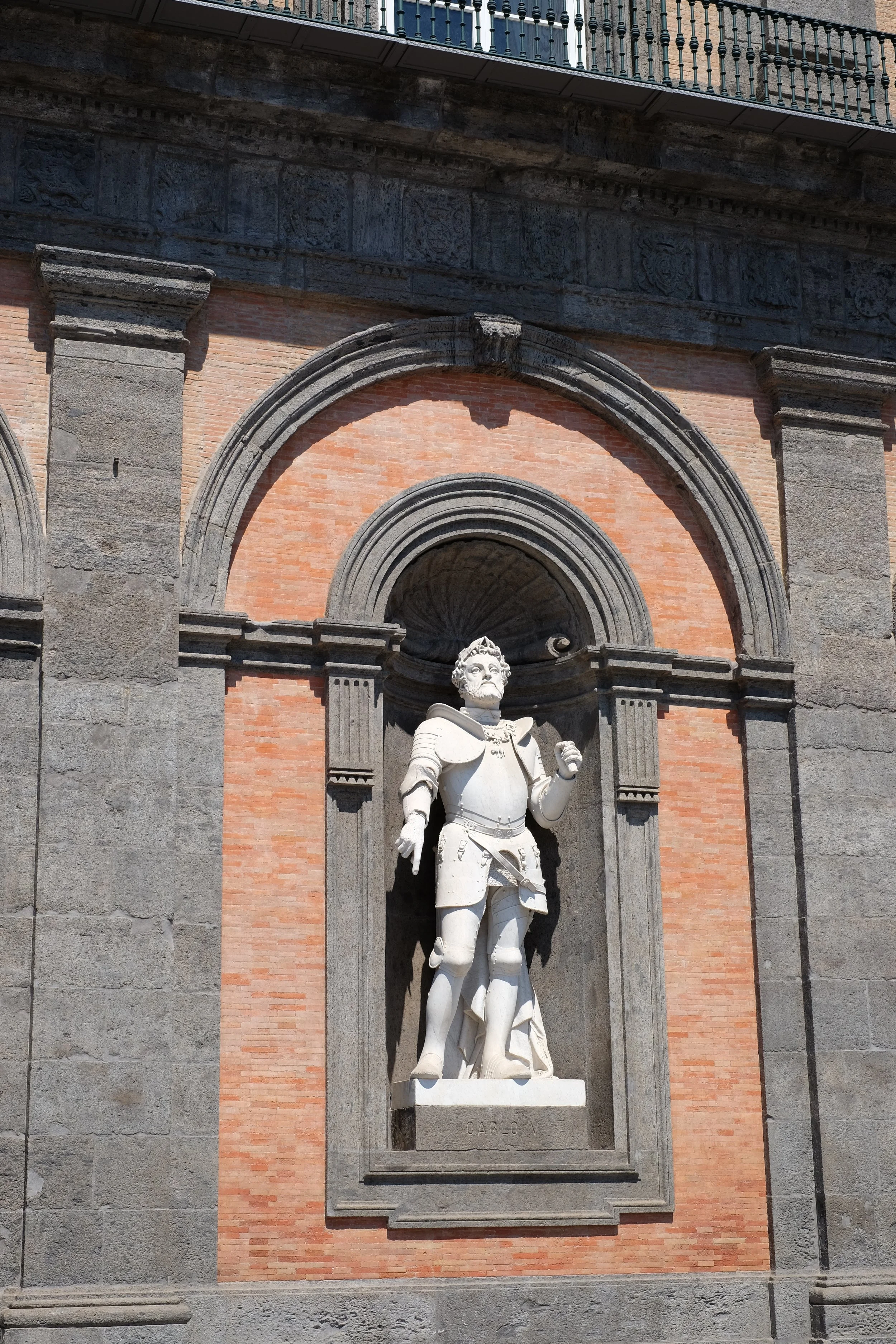
King Charles V of Asburg.
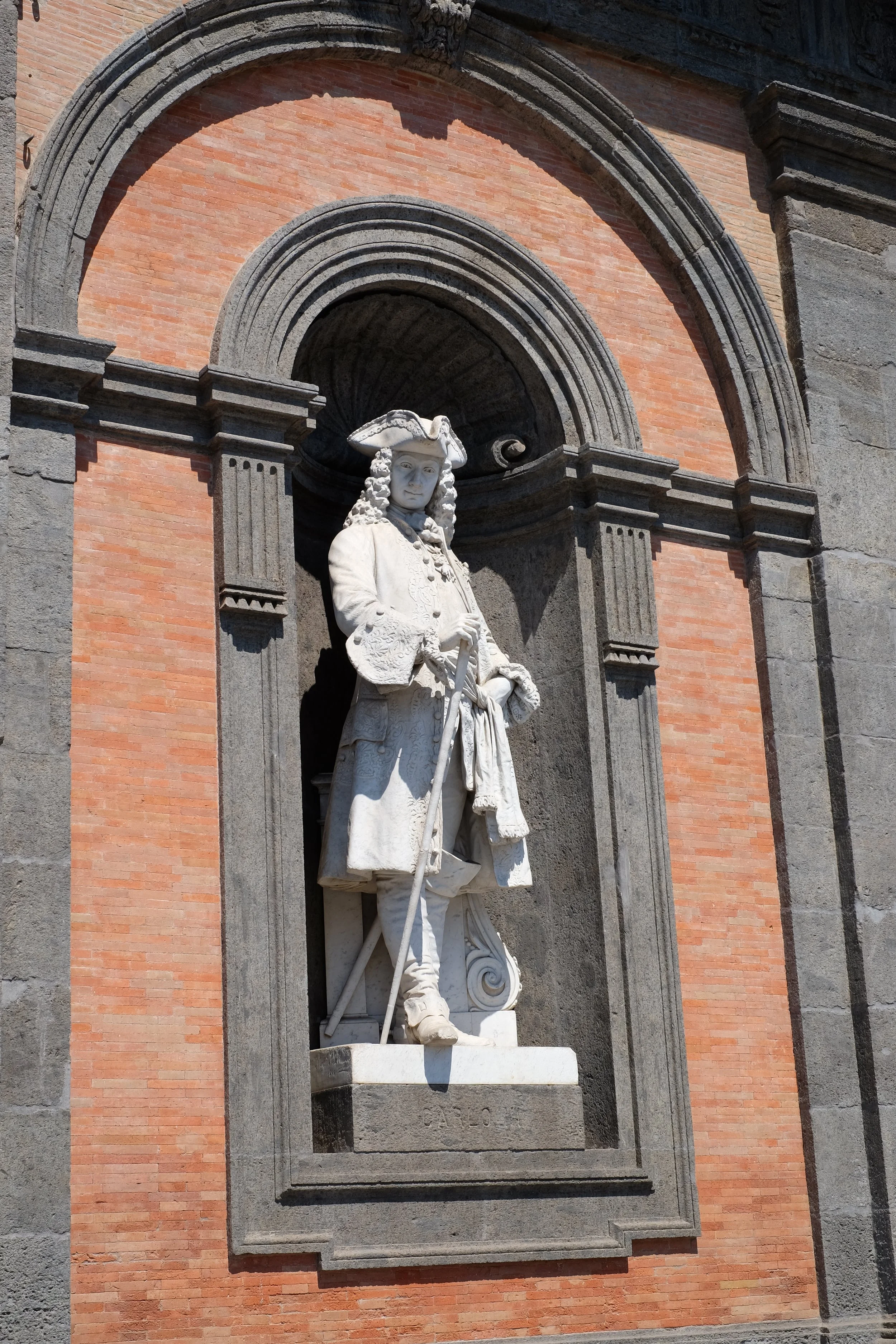
King Charles III.
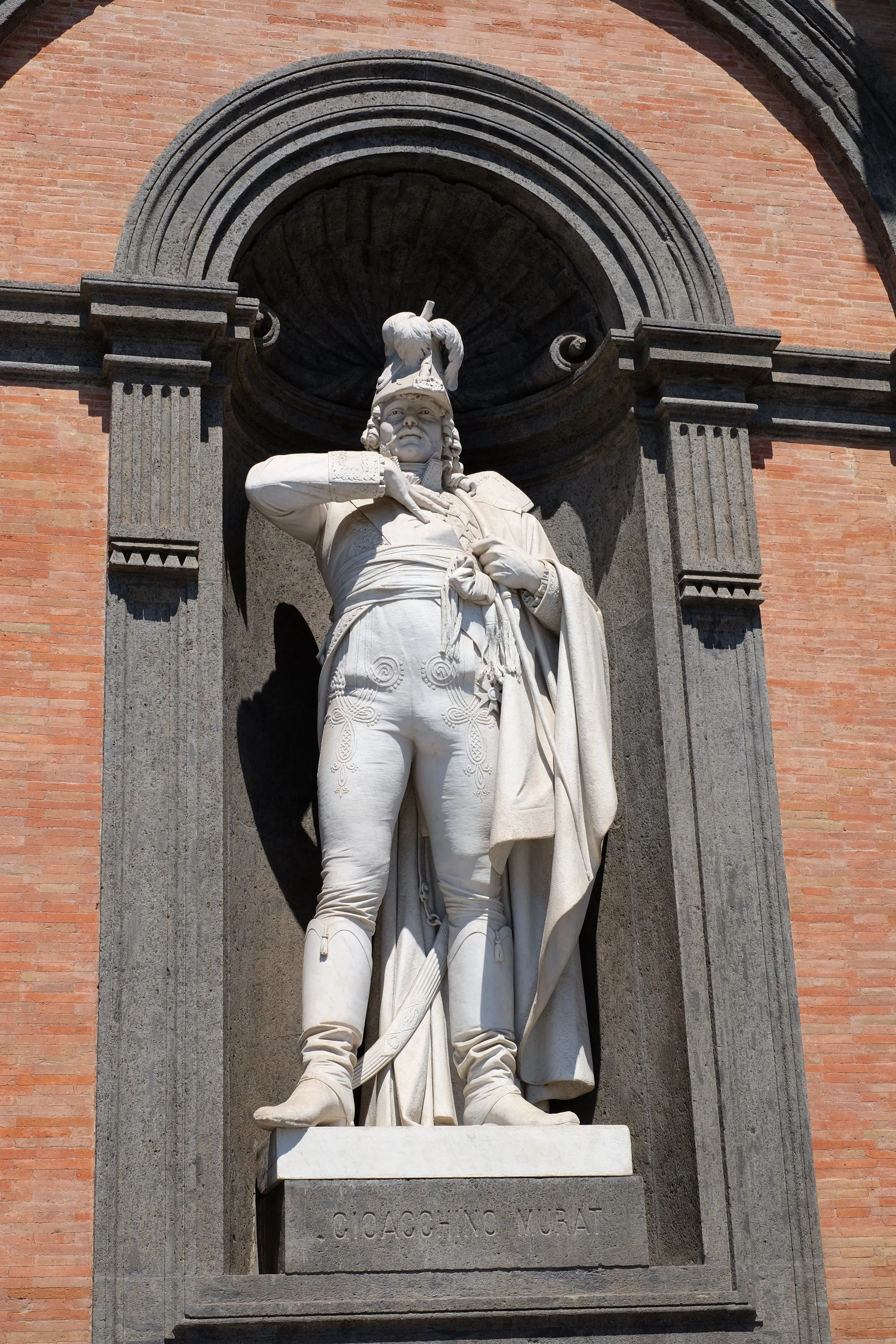
Gioacchino Murat.
Napoli was an important place during the French Revolution. The Republicans took Castel Sant'Elmo which became their fort and Napoleon conquered the city and gave it to his brother Joseph Bonaparte. In 1815, Napoli was declared the capital of the Kingdom of Two Sicilies.
The foreign monarchies were expelled from Italy when Giuseppe Garibaldi started his 'revolution' to unify the country in 1861.
During WWII, Napoli was the most bombed city in Italy. Many archives and churches, (see Santa Chiara church), were destroyed by the allied bombing. Towards the end of the Fascist era, the Neapolitans rose up against the German soldiers, holding out until the Americans and British armies freed the city in 1943.
UNESCO awarded the centro storico (the historic centre) of Napoli a world heritage site in 1995.
Napoli is one of the biggest cities in Italy with a population of almost 1 million inhabitants, including me, living under the majestic presence of Mount Vesuvius, facing the beautiful gulf and surrounded by the Sorrento coast to the east. The city has many hills, like the Vomero and Camaldoli.
Napoli is considered the 'citta' del sole' (the city of the sun) for a good reason: here the sun shines for 250 days during the year!
The Neapolitan climate is Mediterranean, so very hot and dry in Summer (July and August in particular), mild with rains during the other seasons.
When it best to go to Napoli?
In my opinion, the best months are from April to June, the spring in Naples is stunning, mild but not too hot; however, September - October can be good months as well. I would try to avoid the high season which is July and particularly August, when there is the big bank holiday of Ferragosto (15th) and the city is quieter, while the Sorrento and Amalfi coast is over crowed. In winter, I really recommend to visit Napoli in December when all the city lights up for the festive holiday. It is a great experience.
When you come to visit Napoli you can feel all these centuries of history flowing through the streets of the city, into the food we eat (many Neapolitan traditional recipes are simply a reinterpretation of Spanish and French meals), and also in our personalities. As you can see, in our blood flows a mixture of many peoples: we are philosophers like the Greeks, practical like the Spanish, and elegant like the French.
Neapolitans can charm those who come to the city exactly like Parthenope. See Naples and die!
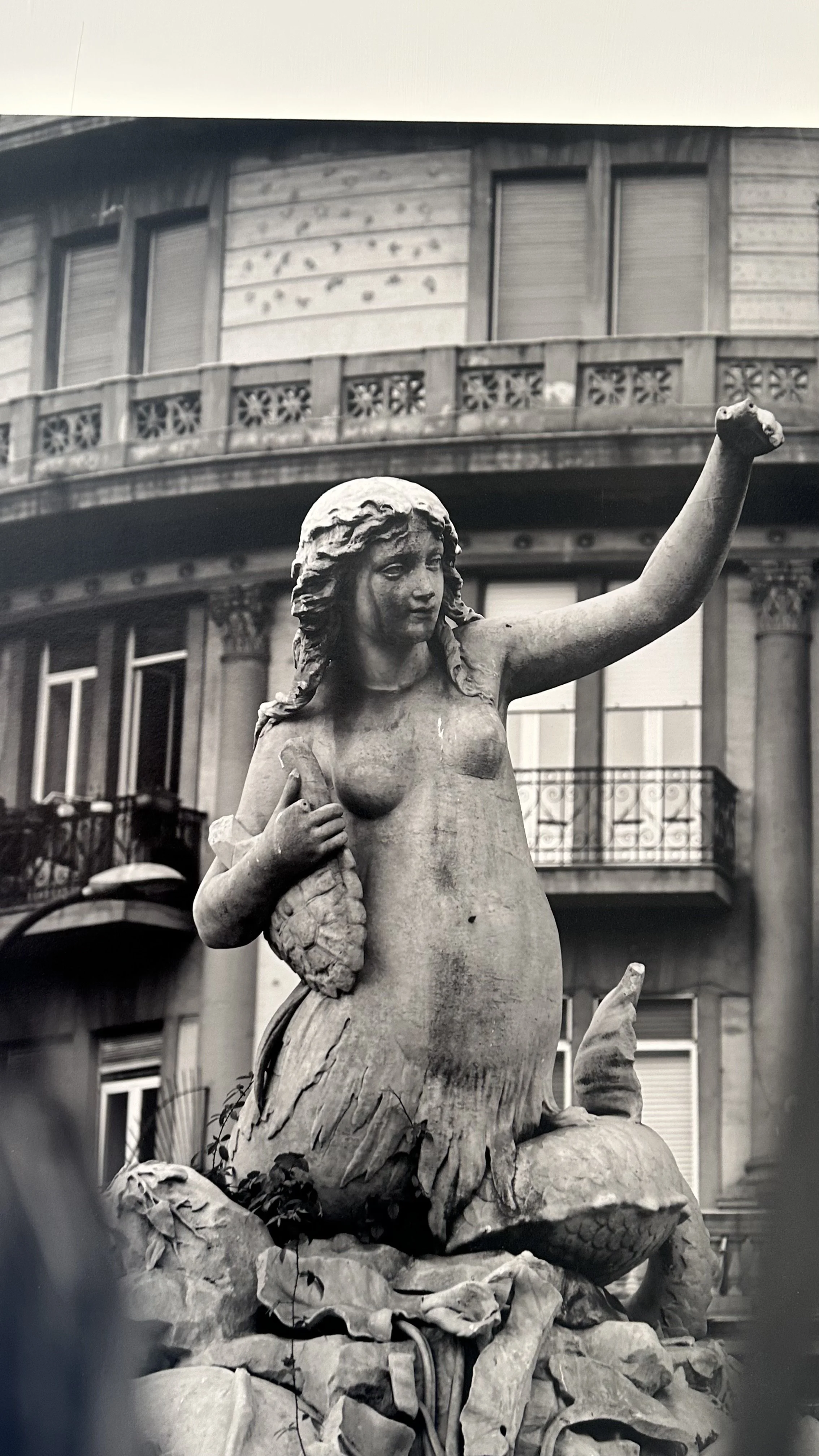
The Parthenope Fountain in Mergellina, constructed in 1869.
I wrote another blog about the exciting revival and rejuvenation of 21st century Napoli and how is leaving its difficult times behind and building for a more confident and brighter future. you can read it here: Napoli - THE RENAISSANCE.